
Latania lontaroides
Pronunciation: (lah-tah-NEE-ah) (lohn-tah-roh-EE-dehz)
Common names: Red Latan Palm
Family: Arecaceae | Subfamily: Coryphoideae | Tribe: Borasseae
Botanical Description
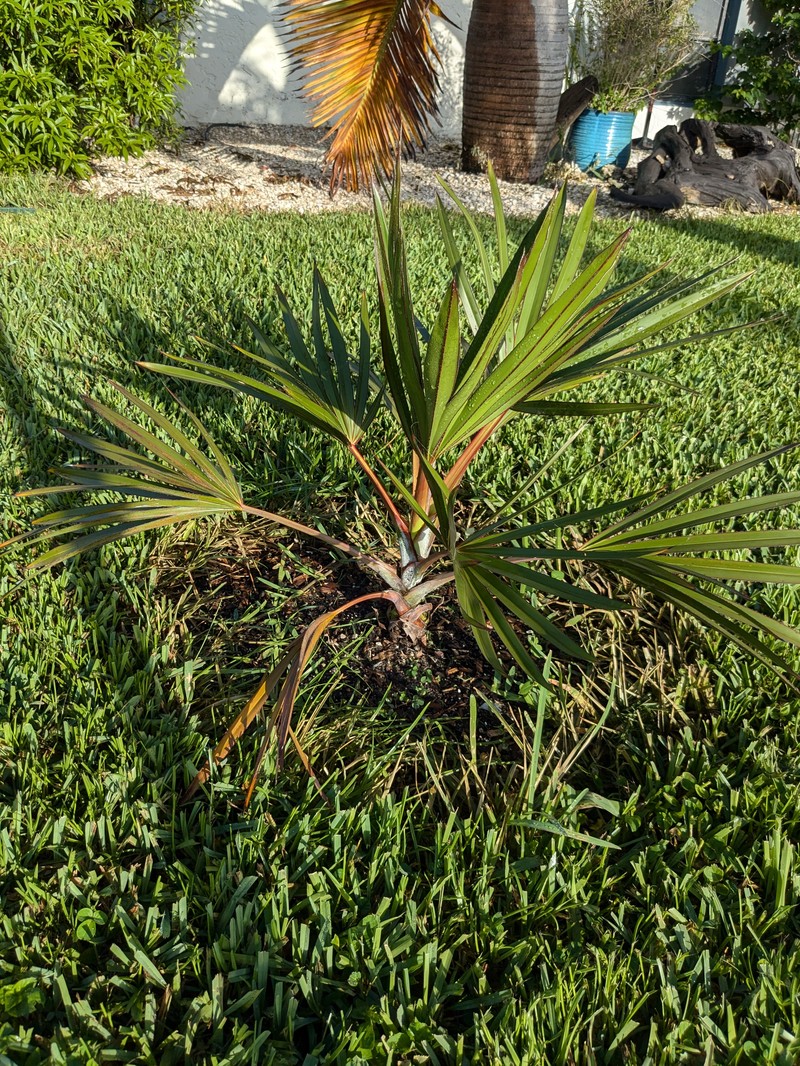
A solitary fan palm reaching 10–15 m tall with a stout, grey columnar trunk prominently ringed by leaf scars. Leaves costapalmate, bluish-green, up to 3 m across, with long stout petioles sometimes edged with small spines. Inflorescences are interfoliar, branched, and shorter than the leaves. Fruits rounded to ovoid, 5–7 cm across, ripening reddish-orange to brown. 1
Distribution & Taxonomy
Endemic to Réunion Island in the Mascarene Islands. Originally described as Corypha lontaroides Gaertn. in Fruct. Sem. Pl. 1: 21 (1788), later transferred to Latania lontaroides (Gaertn.) H.E.Moore in Principes 11: 154 (1967). Accepted as valid in POWO and IPNI. 23
Global Distribution (Google Maps)
Real terrain and satellite layers provided by Google Maps API, Data from Inaturalist "Research Level" Observations. Click marker for location details.
Conservation Status
Listed as Endangered on the IUCN Red List. Wild populations on Réunion are now extremely limited, with most surviving individuals found in cultivation. 4
Regional Ecology
Occurs in dry lowland forests of Réunion. Adapted to rocky and drought-prone conditions. 1 2
Community Notes
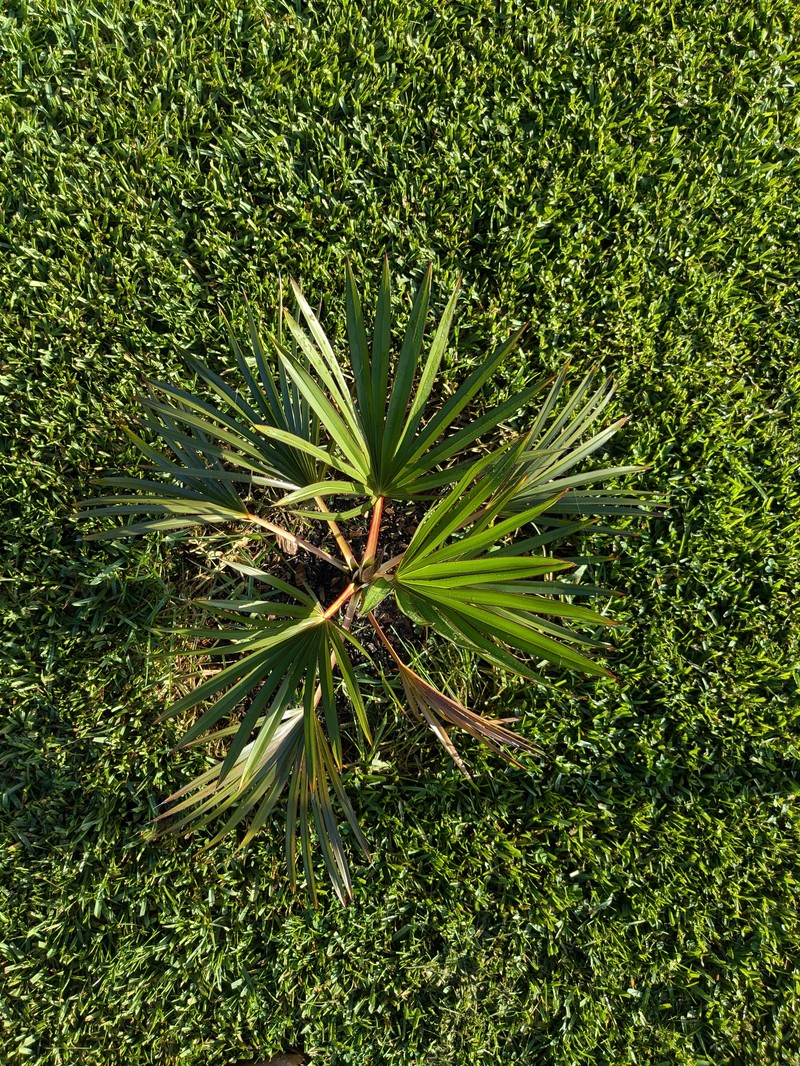
Widely cultivated worldwide as an ornamental palm. Known for its large bluish-green leaves and the red coloration of emerging leaf sheaths in young plants. Fruits are striking, adding ornamental value. 1
Field Gallery
Sources
- Palmpedia. “Latania lontaroides.”
- POWO. “Latania lontaroides (Gaertn.) H.E.Moore.”
- IPNI. “Latania lontaroides (Gaertn.) H.E.Moore, Principes 11: 154 (1967).”
- IUCN. “Latania lontaroides — Endangered.”